Computational-Based Drug Designing: A Modern Approach to Drug Discovery
Computational-based drug designing is a modern approach to drug discovery that uses computer simulations and bioinformatics tools to identify and optimize potential drug candidates. This blog explains key techniques such as molecular docking, virtual screening, ligand-based drug design, molecular dynamics, and ADMET prediction.
 Ankita Shastri
Feb 24, 2026 05:32
3468
0
Ankita Shastri
Feb 24, 2026 05:32
3468
0
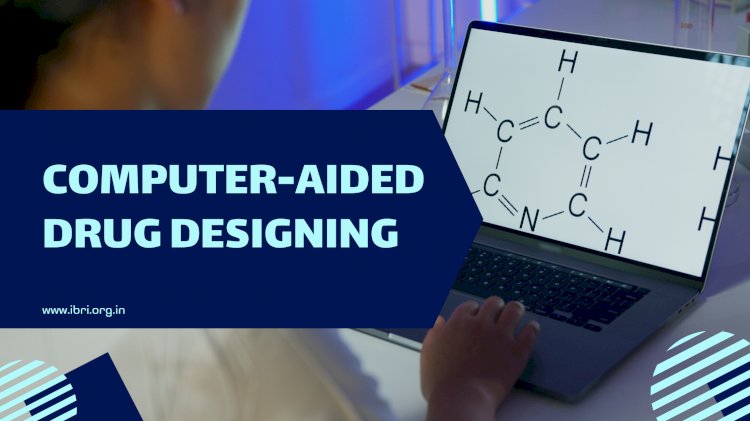
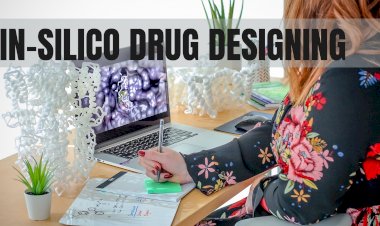
Computational-based drug designing, also known as Computer-Aided Drug Design (CADD), has become an essential component of modern pharmaceutical research. Traditional drug discovery methods are often time-consuming and expensive, requiring years of laboratory testing and clinical validation. Computational approaches accelerate this process by using advanced algorithms and molecular modeling techniques to identify and optimize potential drug candidates. By integrating bioinformatics, structural biology, and cheminformatics, computational drug designing enables researchers to predict molecular interactions, improve drug efficacy, and reduce experimental costs.
This blog provides an overview of computational drug design workflows, major techniques, tools, and their importance in modern biomedical research.
Introduction to Computational Drug Designing
Computational drug designing involves the use of computer-based methods to discover, analyze, and optimize drug molecules. Instead of testing thousands of compounds experimentally, researchers can screen virtual compound libraries and identify promising drug candidates efficiently. This approach significantly reduces the time and cost required for drug development.
Pharmaceutical companies and research institutions use computational techniques to understand protein structures, predict ligand binding, and design molecules with improved therapeutic properties. Organizations such as Pfizer, Novartis, and Roche widely apply computational drug design methods in their research pipelines.
Computational drug designing plays a key role in fields such as:
-
Cancer research
-
Infectious diseases
-
Personalized medicine
-
Enzyme inhibitor design
-
Vaccine development
Target Identification and Validation
The first step in computational drug designing is identifying a suitable biological target. A target is typically a protein, enzyme, or receptor that plays a critical role in a disease pathway. Understanding the structure and function of the target helps researchers design molecules that can modulate its activity.
Target identification involves analyzing genomic and proteomic data to determine which proteins are associated with a disease. Once a potential target is identified, validation studies confirm that modifying the target can produce a therapeutic effect.
Structural databases such as the Protein Data Bank provide experimentally determined protein structures that are used in computational modeling.
Structure-Based Drug Design
Structure-based drug design (SBDD) relies on the three-dimensional structure of a biological target. The availability of protein crystal structures allows researchers to analyze binding pockets and design molecules that fit precisely into the active site.
This approach involves studying molecular interactions such as hydrogen bonding, hydrophobic interactions, and electrostatic forces. By optimizing these interactions, researchers can design compounds with higher binding affinity and specificity.
Structure-based drug design is particularly useful when high-resolution protein structures are available.
Molecular Docking
Molecular docking is one of the most widely used techniques in computational drug design. Docking predicts how a small molecule (ligand) binds to a target protein and estimates the binding affinity between them.
Docking simulations generate multiple binding poses and rank them based on scoring functions. These scores help researchers identify compounds that are most likely to interact effectively with the target protein.
Popular docking software includes:
-
AutoDock
-
PyMOL
-
Schrödinger Suite
-
Molegro Virtual docker
Docking studies help prioritize compounds for experimental testing and reduce the number of molecules that need laboratory validation.
Ligand-Based Drug Design
Ligand-based drug design is used when the three-dimensional structure of the target protein is unknown or not available. Instead of relying on protein structural information, this approach uses data from known biologically active compounds to design new drug candidates. By analyzing similarities in molecular structure and biological activity, researchers can identify important chemical features responsible for target interaction and use them to develop improved compounds with better efficacy and selectivity.
Common techniques in ligand-based drug design include pharmacophore modeling, Quantitative Structure–Activity Relationship (QSAR) analysis, and similarity searching. These methods help identify potential lead molecules and predict biological activity. Ligand-based approaches are especially useful in the early stages of drug discovery when structural information about the target is limite
Molecular Dynamics Simulation
Molecular dynamics (MD) simulation studies the physical movements of atoms and molecules over time. Unlike docking, which provides a static snapshot, MD simulations reveal how protein–ligand complexes behave in a dynamic environment.
These simulations help researchers:
-
Evaluate binding stability
-
Study conformational changes
-
Understand molecular flexibility
-
Improve drug binding predictions
MD simulations provide deeper insight into molecular interactions and improve the reliability of computational predictions.
Virtual Screening
Virtual screening is a powerful computational technique used to evaluate large chemical libraries containing thousands to millions of compounds in a rapid and cost-effective manner. Instead of experimentally testing every compound in the laboratory, researchers can use computational methods to identify molecules with a high probability of biological activity. This significantly accelerates the early stages of drug discovery and reduces the cost and effort associated with large-scale experimental screening.
Virtual screening methods generally include structure-based screening, which uses the three-dimensional structure of a target protein to predict how well potential ligands can bind to the active site, and ligand-based screening, which identifies compounds with structural and chemical similarities to known active molecules. By narrowing down large compound libraries to a smaller set of promising candidates, virtual screening helps researchers efficiently identify lead compounds for further experimental validation.
ADMET Prediction
ADMET stands for Absorption, Distribution, Metabolism, Excretion, and Toxicity. Predicting ADMET properties early in drug discovery helps eliminate compounds that are likely to fail in later stages.
Computational ADMET prediction evaluates:
-
Drug absorption
-
Bioavailability
-
Toxicity
-
Metabolic stability
Early ADMET screening reduces development costs and increases the success rate of drug candidates.
Advantages of Computational Drug Designing
Computational drug designing offers several advantages over traditional drug discovery methods:
-
Reduced research cost
-
Faster drug discovery
-
Efficient compound screening
-
Improved success rates
-
Reduced experimental workload
These benefits make computational approaches indispensable in modern pharmaceutical research.
Applications in Modern Medicine
Computational drug designing has contributed to the development of drugs for various diseases including cancer, viral infections, and neurological disorders. It also plays an important role in personalized medicine by enabling the design of drugs tailored to individual genetic profiles.
Recent advances in artificial intelligence and machine learning are further improving computational drug discovery, making predictions faster and more accurate.
Training Opportunities in Computational Drug Designing
Students and researchers interested in learning computational drug designing can benefit from structured training programs that combine theoretical knowledge with practical experience. Training programs typically cover molecular docking, protein preparation, ligand preparation, and simulation techniques.
Hands-on training helps learners gain experience with industry-standard tools and real biological datasets. Institutions such as Indian Biological Sciences and Research Institute offer training programs in computational biology and drug designing that prepare students for careers in bioinformatics, pharmaceutical research, and biotechnology.
These programs are especially useful for life-science students who want to develop computational skills alongside their biological knowledge.
Conclusion
Computational-based drug designing has transformed the way new drugs are discovered and developed. By combining bioinformatics, molecular modeling, and advanced computational techniques, researchers can identify promising drug candidates faster and more efficiently than ever before.
From target identification to molecular docking and ADMET prediction, computational approaches streamline the drug discovery process and reduce experimental costs. As computational power and algorithms continue to improve, computer-aided drug design will play an increasingly important role in shaping the future of medicine.