A Complete Roadmap to Become a Bioinformatician in 2026
A step-by-step 2026 roadmap to become a bioinformatician: education, Python/R, core databases, tools, machine learning, portfolio building, and salary expectations in India.
 Sheetal
Aug 3, 2026 03:15
1583
1
Sheetal
Aug 3, 2026 03:15
1583
1
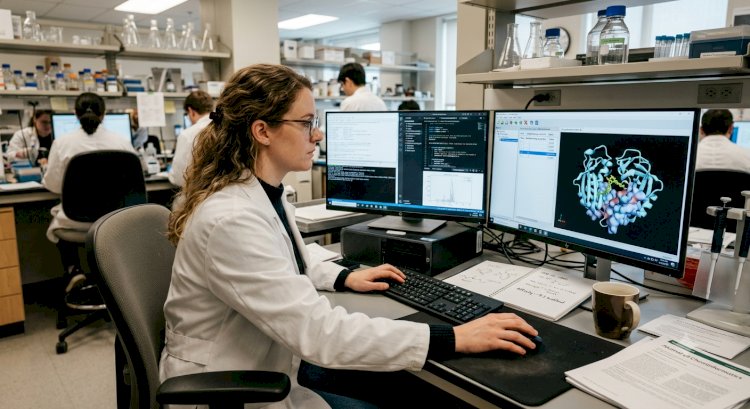
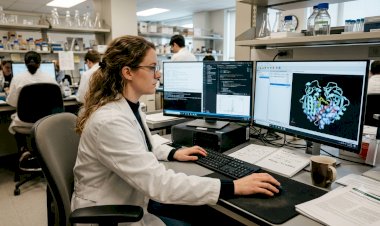
Genomic sequencing is now cheap enough that a hospital can order it, drug companies are running AI models on protein structures instead of waiting years for crystallography, and every biology lab that used to hire "just a biologist" now wants someone who can also write a Python script. That shift is why bioinformatics has quietly become one of the more secure interdisciplinary careers you can build it sits at the intersection of biology, computer science, and statistics, and none of those fields are going anywhere.
If you're trying to figure out where to actually start not just "learn Python and biology," but a real sequence of steps here's a practical roadmap.
What Bioinformaticians Actually Do
It's easy to describe bioinformatics abstractly ("computational analysis of biological data") and much harder to picture what the job looks like day to day. In practice, bioinformaticians spend their time on things like:
- Cleaning and aligning raw sequencing reads before anyone can draw a conclusion from them
- Running differential expression analysis on RNA-seq data to find which genes actually changed
- Predicting or refining protein structures for drug targets
- Building pipelines that other scientists can rerun without babysitting them
- Mining public databases (NCBI, UniProt, GEO) to answer questions no single lab has the data to answer alone
A lot of the job is less "cutting-edge AI" and more "making sure the data is trustworthy before anyone builds a model on it." That's not a knock on the field it's the part that makes the exciting work possible.
Step 1: Get the Right Educational Foundation
You don't need one specific degree to get into this field, but you do need either a biology background with computational training bolted on, or a computational background with real biology training bolted on. Half-measures in either direction show up quickly in interviews.
Undergraduate routes that work well:
- B.Sc./B.Tech in Biotechnology, Bioinformatics, Genetics, Microbiology, or Biochemistry
- B.Pharm, for those heading toward drug discovery
- Computer science, statistics, or engineering degrees provided you deliberately pick up molecular biology coursework or a strong self-study track alongside them
For deeper specialization, a master's helps:
- M.Sc./M.Tech in Bioinformatics, Computational Biology, or Genetics
- M.Sc. Biomedical Sciences, particularly for clinical-facing roles
A Ph.D. matters mainly if you're aiming at an academic research career, a principal-scientist track in industry, or a role driving novel methods rather than applying existing ones. It's not a prerequisite for most industry bioinformatics jobs.
Step 2: Actually Learn the Biology, Not Just the Vocabulary
This is the step people skip, and it's the one that separates a bioinformatician from someone who can run a script without understanding why. If you can't explain why a differential expression result matters biologically, you'll misread your own analyses.
Focus on:
- Molecular biology: DNA replication, transcription, translation, gene regulation
- Genetics: Mendelian inheritance, mutations, genetic variation, epigenetics
- Genomics: genome organization, comparative genomics, whole-genome sequencing
- Proteomics: protein structure, folding, interactions, and function
- Cell biology: signaling pathways, the cell cycle, apoptosis
- Immunology, if you're headed toward vaccine or antibody work
- Drug discovery fundamentals: target identification, lead optimization, molecular docking, ADMET properties
You don't need to master all of these equally pick the ones relevant to the specialization you're aiming for, and go deep there.
Step 3: Learn to Program Python First, R Close Behind
Python
Python is the closest thing bioinformatics has to a lingua franca, mostly because of its libraries.
Core skills: variables, loops, functions, file handling, and basic object-oriented programming. Then move into the libraries that actually get used daily:
- Biopython for sequence parsing and manipulation
- NumPy and Pandas for numerical and tabular data
- Matplotlib/Seaborn for visualization
- Scikit-learn for classical machine learning
R
R still dominates statistical genomics, particularly RNA-seq analysis, and you'll run into it constantly in published pipelines. Learn:
- Bioconductor, the ecosystem most genomics packages live in
- DESeq2 and edgeR for differential expression
- ggplot2 for publication-quality plots
SQL
Biological data eventually lives in databases, and a lot of "why is this pipeline slow" problems come down to a bad query. Learn SELECT, JOIN, GROUP BY, and basic schema design — you don't need to be a DBA, just competent.
Step 4: Know the Major Biological Databases Cold
You'll use these constantly enough that fumbling through them in an interview is a red flag. Get comfortable with:
- NCBI — GenBank, PubMed, BLAST
- UniProt — protein sequences and functional annotation
- PDB (Protein Data Bank) — 3D protein structures
- Ensembl — genome browsers and annotation
- KEGG — metabolic and disease pathways
- GEO — public microarray and RNA-seq datasets
- EMBL-EBI resources — InterPro, Pfam, ArrayExpress
A good exercise: pick a gene you're curious about and trace it through all of these. That alone teaches you more than reading a list of database names.
Step 5: Get Comfortable in Linux
Most serious bioinformatics tools are written for Linux, full stop — many won't run cleanly anywhere else. If you've never touched a terminal, this is worth doing early rather than as an afterthought.
Learn the basics first (pwd, ls, cd, mkdir, cp, mv, rm, cat), then the tools that actually save time: grep, awk, sed for text processing, chmod for permissions, and wget/curl for pulling data. Once those feel natural, move into bash scripting, environment variables, and job scheduling (many academic clusters still run on SLURM or similar schedulers) — this is what lets you turn a one-off analysis into something reproducible.
Step 6: Learn the Field's Core Tools
Employers expect hands-on familiarity, not just theoretical knowledge, with tools like:
|
Category |
Common Tools |
|
Sequence alignment |
BLAST, Clustal Omega, MUSCLE |
|
Genome analysis |
BWA, Bowtie2, SAMtools, GATK |
|
RNA-seq |
HISAT2, STAR, StringTie, DESeq2 |
|
Protein structure |
Swiss-Model, AlphaFold, InterProScan |
|
Molecular docking |
AutoDock Vina, PyRx |
|
Molecular visualization |
PyMOL, UCSF Chimera/ChimeraX |
|
Molecular dynamics |
GROMACS, NAMD, Desmond |
You won't need all of these for any single job. Figure out which specialization interests you (genomics, structural biology, drug discovery) and go deep on that column rather than shallow across all of them.
Step 7: Add Machine Learning — Deliberately, Not as a Buzzword
AI is genuinely changing parts of this field — AlphaFold's structure predictions are a real example, not hype — but it's a layer on top of solid fundamentals, not a replacement for them. Build up:
- Supervised and unsupervised learning basics
- Enough deep learning to understand what a CNN or transformer is doing conceptually
- Feature engineering specific to biological data (which behaves very differently from, say, image data)
- How to actually evaluate a model rigorously biological datasets are often small and noisy, so overfitting is a constant risk
Useful libraries: Scikit-learn to start, then TensorFlow or PyTorch, and XGBoost for tabular biological data, which shows up more often than deep learning does in practice.
Step 8: Learn to Communicate Results, Not Just Generate Them
A correct analysis that no one can understand doesn't help anyone. Get comfortable producing and reading:
- Heatmaps and volcano plots (RNA-seq staples)
- PCA plots for exploring sample clustering
- Manhattan plots for GWAS results
- Network diagrams for pathway or interaction data
Cytoscape and GraphPad Prism are common in wet-lab-adjacent teams; R and Python cover most of the rest.
Step 9: Build a Portfolio That Shows Real Work
A GitHub full of tutorials you copied isn't a portfolio it's evidence you can follow instructions. What actually gets attention:
- A well-documented end-to-end project (e.g., "raw FASTQ files to differentially expressed gene list, with reasoning at each step")
- A molecular docking study with a clear hypothesis, not just "I ran AutoDock on a random protein"
- Scripts with comments explaining why, not just what
- A short write-up for each project: the question, the method, the result, and importantly what you'd do differently next time
That last point matters more than people think. Employers reading a portfolio can tell the difference between someone who ran a tutorial and someone who actually understood the analysis.
Step 10: Get Real Hands-On Experience
Reading about pipelines and running one on messy, real data are different skills. Look for:
- Internships (summer research programs are a common entry point)
- A dissertation or capstone project using real datasets
- Research assistantships with faculty
- Hackathons genuinely useful for learning to work under time pressure with unfamiliar data
- Contributing to an open-source bioinformatics tool, even in a small way (documentation counts)
Step 11: Certifications Useful, But Not a Substitute for Projects
Certifications can round out a resume, especially in areas your degree didn't cover NGS analysis, molecular docking, cloud computing (AWS, GCP, Azure all have life-sciences relevant offerings). Choose ones with actual graded projects, not just video-watching. A certificate alone won't get you hired; a certificate backed by a project you can talk through in an interview will.
Step 12: Don't Neglect the "Soft" Skills
Technical skill gets you in the door; these get you hired and kept:
- Scientific writing and literature review you'll be reading papers constantly
- Explaining a complex result to someone without your technical background (a PI, a clinician, a product manager)
- Basic project and time management, since bioinformatics work is often deadline-driven around grant cycles or trial phases
Where the Jobs Actually Are
- Pharma: drug discovery scientist, computational chemist, bioinformatics analyst
- Biotech: genomics specialist, computational biologist, data analyst
- Healthcare: clinical bioinformatician, precision medicine specialist
- Research institutes: research scientist/associate, bioinformatics consultant
- Academia: research fellow, lecturer, assistant professor
- Agricultural biotech: plant genomics researcher, crop improvement scientist
- Environmental science: metagenomics analyst, microbial ecology researcher
Salary Expectations in India (2026)
These are rough market ranges — actual pay varies a lot by city, company, and specialization, so treat this as a general sense of scale rather than a guarantee.
|
Experience Level |
Approximate Annual Salary |
|
Entry Level (0–2 yrs) |
₹4–7 LPA |
|
Junior Bioinformatician (2–4 yrs) |
₹7–10 LPA |
|
Mid-Level (4–7 yrs) |
₹10–18 LPA |
|
Senior Scientist (7–12 yrs) |
₹18–30 LPA |
|
AI/Bioinformatics Specialist |
₹20–40+ LPA |
Skills in AI, cloud infrastructure, and NGS pipeline development tend to push people toward the higher end of these ranges faster than years of experience alone.
What to Watch in the Coming Years
- Multi-omics integration (combining genomic, proteomic, and metabolomic data rather than analyzing each in isolation)
- Single-cell sequencing becoming standard rather than specialized
- Cloud-based pipelines replacing a lot of on-premise cluster work
- Explainable AI, as clinical applications demand models that can justify their predictions, not just make them
Final Thoughts
There's no shortcut through this the people who succeed in bioinformatics combine real biological understanding with real computational skill, and they build that combination through projects, not just coursework. Start with the fundamentals, pick a specialization once you have a feel for what interests you, and build a portfolio that shows your thinking, not just your output. The field is growing fast enough that solid fundamentals plus genuine hands-on experience will carry you a long way.