From Decades to Days :The Wild History of DNA Sequencing
What once took 13 years and $3 billion now takes a day and $300. Discover the history, science, and impact of Next Generation Sequencing (NGS).
 Sheetal
Aug 12, 2026 04:24
393
0
Sheetal
Aug 12, 2026 04:24
393
0
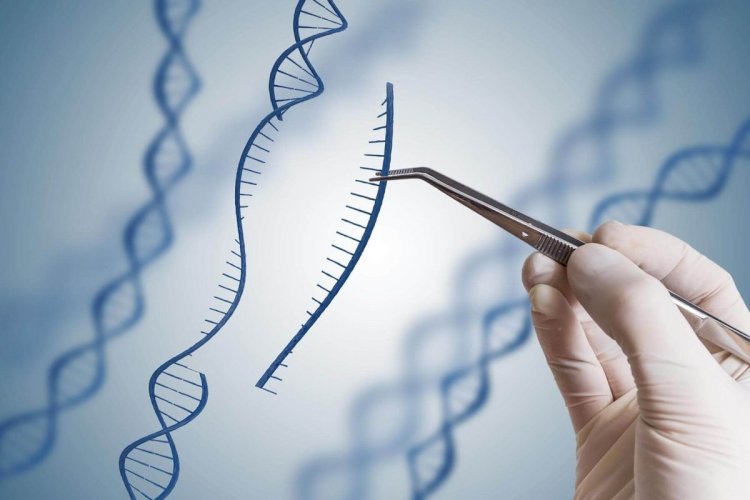
What once took 13 years and $3 billion can now be done before your coffee gets cold. That's the story of Next Generation Sequencing (NGS) , a technology so transformative it didn't just speed up genome sequencing, it completely rewired what's possible in medicine, agriculture, and our understanding of life itself.
Introduction
Next Generation Sequencing (NGS), also called high-throughput sequencing or massively parallel sequencing, refers to a group of technologies that determine the order of nucleotides (A, T, G, C) in DNA or RNA molecules on a massive scale. Unlike older methods that could sequence one DNA fragment at a time, NGS platforms sequence millions to billions of fragments simultaneously, generating enormous volumes of data in a fraction of the time and cost of earlier approaches.
NGS has transformed biology and medicine. It underlies whole-genome sequencing, cancer genomics, prenatal testing, infectious disease surveillance, agricultural genomics, forensic science, and personalized medicine.
|
$3,000,000,000 → $300 The cost of sequencing a human genome, then vs. now |
A Brief History of DNA Sequencing

1977 — Sanger sequencing
Frederick Sanger's chain-termination method used modified nucleotides (ddNTPs) that stopped DNA synthesis when incorporated. Reading the resulting fragment sizes revealed the sequence accurate but only a few hundred bases per run.
1990–2003 — Human Genome Project
Built entirely on Sanger sequencing, this effort sequenced the first full human genome, taking 13 years and about $3 billion proof that a faster method was badly needed.
2005 — 454 Life Sciences
The first commercial NGS platform. It used pyrosequencing: each time a base is added to a growing DNA strand, it releases a flash of light, which is measured to identify the base.
2006 — Illumina
Introduced sequencing-by-synthesis with reversible fluorescent terminators. It became the dominant NGS platform due to its high accuracy and throughput.
2007 — SOLiD
Used sequencing-by-ligation, where short fluorescent DNA probes are ligated onto the template strand, and the color of each ligation event reveals the base sequence.
2010 — Ion Torrent
Skipped light-based detection entirely it measures the tiny pH change caused by a hydrogen ion released each time a base is incorporated.
2010s — PacBio & Oxford Nanopore
The “third generation.” PacBio watches a single DNA polymerase synthesize DNA in real time. Nanopore threads a single DNA/RNA strand through a protein pore and reads disruptions in electrical current both producing much longer reads than earlier platforms.
The overall arc: each generation traded off speed, cost, and read length differently moving from slow-but-accurate (Sanger), to fast-and-massively-parallel-but-short-read (second gen), to long-read-single-molecule (third gen).
The Core Theory Behind NGS
While different platforms use different chemistries, most NGS workflows share a common conceptual framework — four steps that take raw DNA all the way to biological insight:
1. Library Preparation
DNA is fragmented into small pieces, and short synthetic adapters are ligated to both ends. These adapters let fragments bind to the sequencing platform, provide priming sites, and can carry barcode sequences so multiple samples can be pooled into one run.
2. Amplification
Most short-read platforms clone each fragment into a cluster of identical copies to get a strong enough signal — Illumina uses bridge amplification, while 454, Ion Torrent, and SOLiD use emulsion PCR. Long-read platforms like PacBio and Nanopore skip this step entirely, sequencing single native molecules.
3. Sequencing (Signal Detection)
- Illumina: detects a flash of fluorescent light as each base is added, one cycle at a time.
- 454: detects light released when a base is incorporated (pyrosequencing).
- Ion Torrent: detects a pH change from a released hydrogen ion no optics needed.
- SOLiD: detects the color of fluorescent probes as they're ligated to the strand.
- PacBio: watches a single polymerase synthesize DNA in real time.
- Nanopore: measures disruptions in electrical current as DNA threads through a protein pore.
4. Data Analysis
This is the part that turns raw signal into biological meaning think of it as translating millions of puzzle pieces into a finished picture. In short: reads are quality-checked, aligned to a reference genome (or assembled from scratch), compared to spot differences (variants), and finally interpreted for what those differences actually mean for health or biology.
Why NGS Matters
- Speed — a human genome can now be sequenced in about a day.
- Cost — prices have dropped from billions of dollars to a few hundred dollars per genome.
- Depth — the same region can be sequenced many times over, improving accuracy and catching rare variants (like those in tumors).
- Scale — whole genomes, exomes, transcriptomes, and microbiomes can all be sequenced comprehensively.
Applications of NGS
- Clinical genomics — diagnosing rare genetic diseases and hereditary cancer risk.
- Oncology — tumor profiling to guide targeted therapy.
- Infectious disease — tracking outbreaks, as seen widely during COVID-19.
- Prenatal testing — non-invasive testing using fetal DNA in maternal blood.
- Agriculture — improving crop and livestock genomes.
- Microbiome research — characterizing microbial communities in the gut, soil, and beyond.
- Forensics & ancestry — human identification and population genetics.
The Bottom Line
Next Generation Sequencing represents one of the most significant technological leaps in the history of molecular biology. What began with Sanger's painstaking method in 1977 evolved into a suite of technologies capable of sequencing entire genomes in hours rather than years and the long-read platforms of today are pushing the boundaries even further.
NGS sits at the core of modern genomics, driving progress in personalized medicine, agriculture, infectious disease control, and our fundamental understanding of biology a field still evolving rapidly as sequencing becomes faster, cheaper, and more accessible.
What part of the sequencing revolution excites you most — the speed, the cost drop, or where it's headed next? Drop your thoughts in the comments and share this if you learned something new.