Transcriptomics: A Beginner's Guide to RNA Sequencing, Gene Expression & Its Applications
Discover transcriptomics, RNA sequencing, gene expression analysis, applications and career opportunities. Explore how beginners can start learning transcriptomics.
 Dhriti Thakur
Nov 10, 2026 03:13
60
0
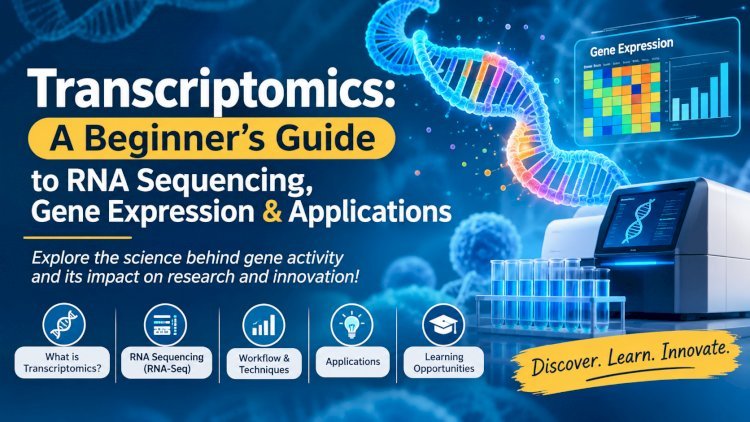
Transcriptomics: A Beginner's Guide
Understanding Gene Expression, RNA Sequencing and Practical Learning Opportunities
Have you ever wondered how scientists identify which genes are active in a cancer cell, why certain diseases develop, or how cells respond to medicines and infections? One way researchers investigate these questions is through Transcriptomics.
Transcriptomics is an important field of modern biological research that helps scientists understand gene activity and explore how cells respond to different biological conditions.
1. What Is Transcriptomics?
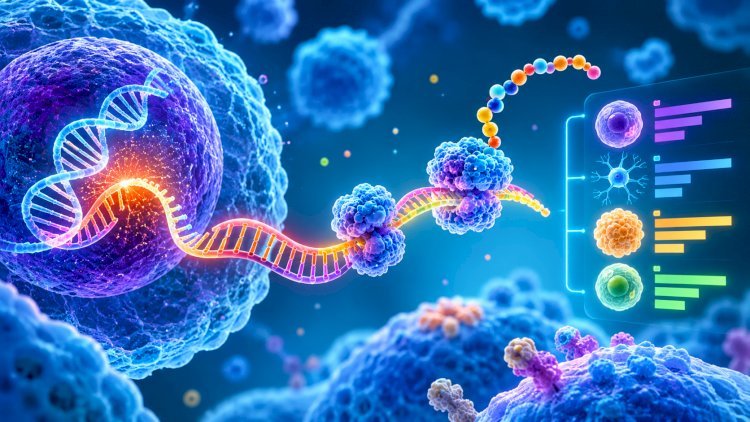
Transcriptomics is the study of the complete set of RNA transcripts produced by the genome of a cell, tissue or organism under a particular condition or at a particular time.
In simple terms, transcriptomics helps us understand which genes are switched ON or OFF and how actively they are being expressed.
Although our DNA contains the instructions needed by our cells, not every gene is active all the time. Gene activity can change depending on cell type, developmental stage, disease, environmental conditions or treatment.
By studying RNA molecules, researchers can understand what is happening inside cells and how biological systems respond to different conditions.
2. Understanding Transcriptomics Through an Example
Imagine comparing healthy cells with cancer cells. Both may contain many of the same genes, but the activity of those genes can be very different.
Some genes may be overexpressed, while others may show reduced expression.
Transcriptomics helps researchers identify these differences, investigate altered biological pathways and explore genes that may be useful as potential biomarkers or therapeutic targets.
This can support research into disease mechanisms and treatment responses.
3. Major Techniques Used in Transcriptomics
Several techniques are used in transcriptomics research to study gene expression.
1. RNA Sequencing (RNA-Seq)
Uses next-generation sequencing technologies to identify and quantify RNA molecules. It is widely used to study gene expression, discover transcripts and compare biological conditions.
2. Microarray Analysis
Measures the expression of many known genes simultaneously using probes on a solid surface. It remains useful for selected research applications.
3. Single-Cell RNA Sequencing (scRNA-Seq)
Studies gene expression at the individual-cell level, helping researchers understand differences between cells within the same tissue.
4. Spatial Transcriptomics
Provides information about where gene expression occurs within a tissue, connecting molecular activity with tissue structure.
5. Bulk RNA Sequencing
Measures RNA expression across a group of cells and is commonly used to compare samples such as healthy versus diseased tissue or treated versus untreated cells.
4. How Does a Typical Transcriptomics Workflow Work?
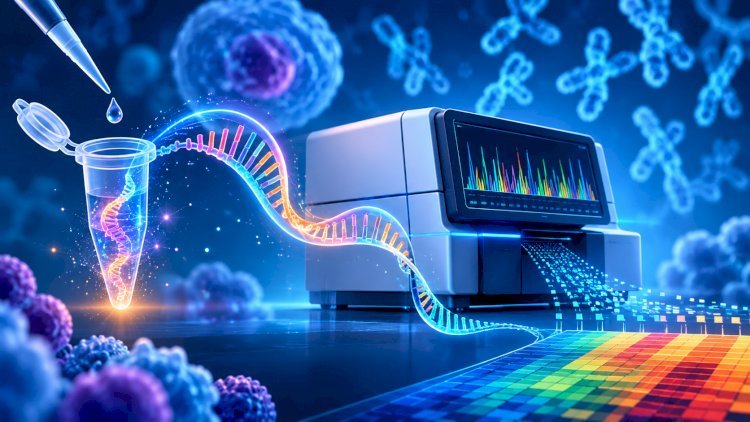
Transcriptomics combines laboratory methods with computational analysis. A typical RNA-Seq workflow includes the following steps:
Step 1: Sample Collection
Collecting blood, tissue, cultured cells or other biological material.
Step 2: RNA Extraction and Quality Assessment
Isolating RNA and checking its quality and quantity.
Step 3: Library Preparation
Preparing the RNA-derived material for sequencing.
Step 4: Next-Generation Sequencing
Generating sequence reads from the prepared library.
Step 5: Quality Control
Checking the quality of raw sequencing data.
Step 6: Read Alignment or Quantification
Mapping or quantifying reads against a reference genome or transcriptome.
Step 7: Differential Gene Expression Analysis
Identifying genes that show changes between conditions.
Step 8: Functional Analysis and Interpretation
Exploring biological pathways and understanding what the results may mean.
This workflow shows why transcriptomics is an interdisciplinary field involving molecular biology, sequencing technologies, statistics and bioinformatics.
5. Applications of Transcriptomics
Transcriptomics has several important applications in modern biological and biomedical research.
Cancer Research
Studying tumour biology, gene-expression changes, treatment resistance and potential biomarkers.
Drug Discovery
Understanding how cells respond to drug candidates and investigating possible therapeutic targets.
Precision Medicine
Exploring molecular signatures and differences in gene expression that may help researchers understand disease variation.
Infectious Disease and Immunology
Investigating immune responses and interactions between hosts and pathogens.
Developmental Biology
Studying changes in gene expression during development and cell differentiation.
Agriculture and Plant Biotechnology
Understanding how plants respond to drought, salinity, pathogens and other environmental stresses.
Neuroscience
Exploring gene-expression patterns in brain regions, cell types and neurological research.
6. Who Can Explore Transcriptomics?
Transcriptomics brings together biology, technology and data analysis.
Students and graduates from the following disciplines can explore this field:
-
Biotechnology
-
Bioinformatics
-
Microbiology
-
Molecular Biology
-
Biochemistry
-
Genetics
-
Genomics
-
Life Sciences
-
Zoology
-
Botany
-
Biomedical Sciences
-
Pharmacy
Students from computer science, mathematics and data science backgrounds can also contribute to the computational side of transcriptomics, provided they build a foundation in molecular biology and genetics.
Prior coding experience is not essential for beginners. Learners can start with the basics of DNA, RNA, gene expression and sequencing, and gradually develop skills in tools and programming languages such as Linux, R and Python.
7. How Can You Start Learning Transcriptomics?
If you are new to the subject, a step-by-step approach can make transcriptomics easier to understand.
Here are some steps to begin your learning journey:
-
Learn the fundamentals of molecular biology, genetics and gene expression.
-
Understand RNA biology and the principles of RNA sequencing.
-
Get familiar with next-generation sequencing workflows.
-
Build introductory skills in Linux, R or Python.
-
Learn the stages of an RNA-Seq data-analysis workflow.
-
Practise with suitable datasets and learn to interpret biological results.
The goal is not simply to learn the names of bioinformatics tools, but to understand the science behind the analysis and interpret the results biologically.
How would you rate your understanding of Transcriptomics after reading this blog?
Choose the option that fits best.
8. Start Your Transcriptomics Learning Journey With Us!
At Indian Biological Sciences and Research Institute (IBRI), we believe that the future of biological research lies in combining strong scientific knowledge with practical, technology-driven skills.
Our Transcriptomics Training Program is designed for students, graduates, researchers and life-science enthusiasts who want to understand the fundamentals of transcriptomics and explore RNA sequencing and bioinformatics workflows.
In addition to transcriptomics, we offer specialised training programmes in other emerging areas of modern biology:
AI-ML in Biology - Explore applications of Artificial Intelligence and Machine Learning in biological research and data analysis.
Bioinformatics - Learn computational approaches, biological databases, sequence analysis and data interpretation.
Next-Generation Sequencing (NGS) - Understand sequencing technologies, workflows and downstream data analysis.
Transcriptomics - Explore RNA biology, RNA-Seq workflows, gene-expression analysis and transcriptomic data interpretation.
Our aim is to bridge the gap between theoretical knowledge and practical skills, helping learners build confidence in biotechnology and computational biology.
Interested in Learning Transcriptomics?
Connect with us to know more about our Transcriptomics Training Program and other specialised training opportunities.
Indian Biological Sciences and Research Institute (IBRI)
WhatsApp: 9971441910
Email: info@ibri.com
Start learning. Build practical skills. Explore the future of biological research with IBRI!